Markdown Is Production Code: Why We Built Zenzic
Markdown Is Production Code: Why We Built Zenzic
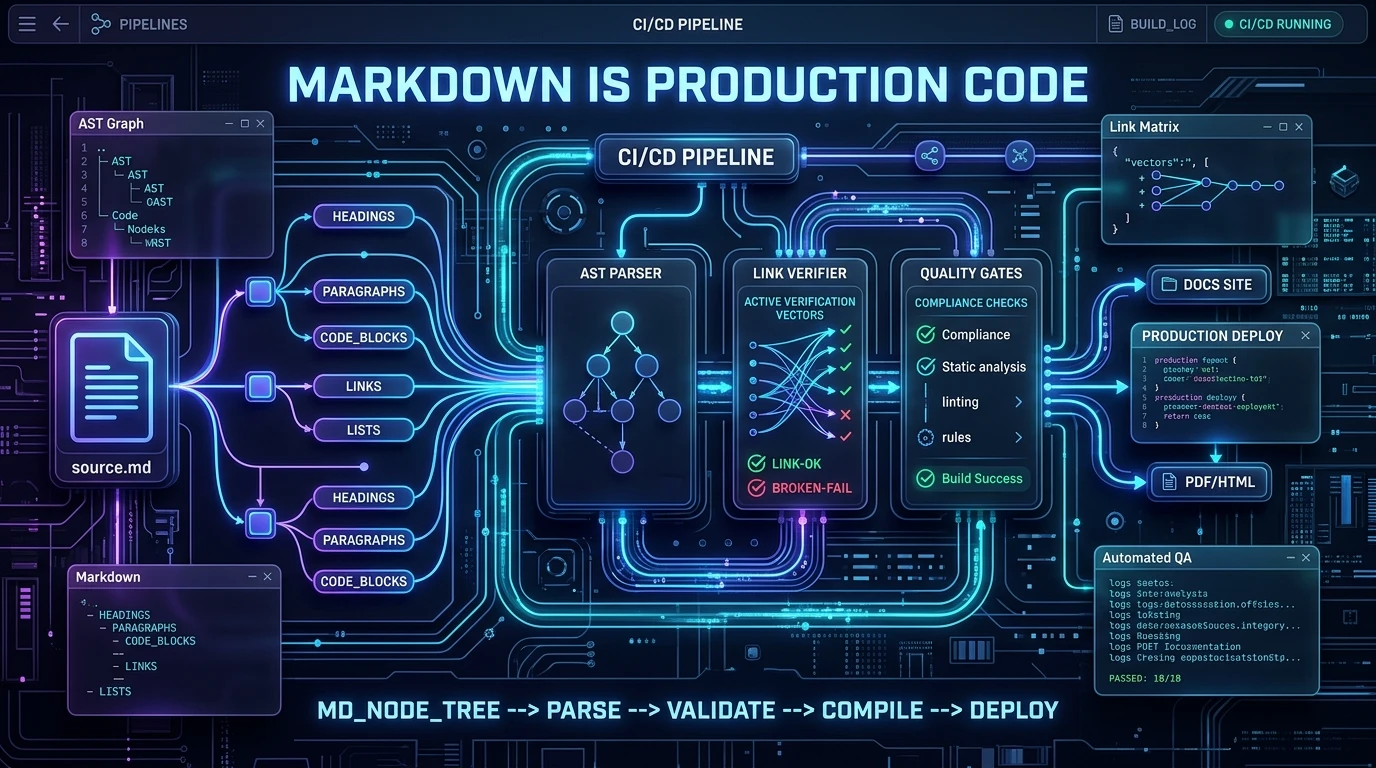
We built Zenzic because we kept seeing the same problem: a documentation repository could be technically “green” while the documentation itself was already broken.
A build can succeed while an internal link points to a file that no longer exists. A page can remain in the repository while no navigation path reaches it. An anchor can become invalid after a heading is renamed. An image can disappear while the Markdown still references it. A code example can contain a live credential that gets copied into a public repository.
The build can still pass.
The deployment can still complete.
The defect is discovered only when a user follows the broken path—or when an exposed credential is abused.
We decided that this was the wrong model.
We built Zenzic to treat documentation integrity as a property that can be tested before a change reaches the main branch.